


Shot of olive oil in the morning
Eight easy habits to build around your morning shot
A tablespoon of high-polyphenol extra virgin olive oil takes thirty seconds. Here are eight simple habits that fit around it, and what the research says where there is any.
- Save 20% to 30%on every subscription
- $1.70 a shot90 days on subscription
- 1,876 mg/kgpolyphenols, as Alya reports
- Free shippingon subscriptions
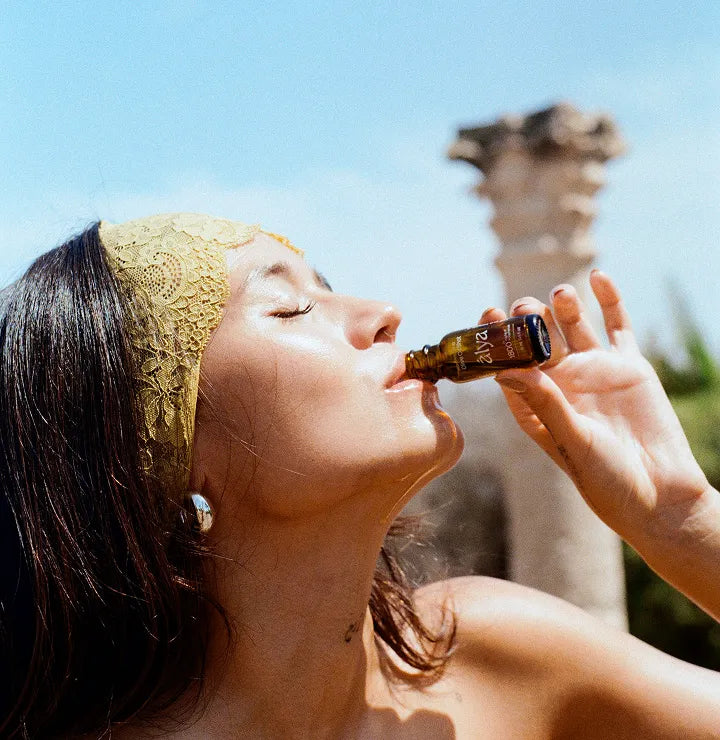
Why a shot of olive oil in the morning anchors a routine
One small ritual that holds the rest in place
A morning routine holds together best when it hangs off one fixed point. For us, that point is a shot of olive oil in the morning: one tablespoon, about thirty seconds, taken before you eat anything. Every habit on this list attaches to it.
Maya grew up in Carthage, on the Tunisian coast, and her grandfather still drinks olive oil with his breakfast. Drinking olive oil in the morning is an old habit in our family, and we built Alya's protocol around that same moment of the day.
The protocol is short. One shot on an empty stomach, 30 minutes before your first meal, every morning. Alya's olive oil shots come in single 15 ml amber glass bottles, one tablespoon each, so there is nothing to measure.
Inside is high-polyphenol extra virgin olive oil from early-harvest Chetoui olives on our family's farm in Testour, in northern Tunisia, cold-pressed within hours of picking and left unfiltered. Alya reports 1,876 mg/kg total polyphenols, tested by the World Olive Center for Health in Athens. That peppery catch at the back of your throat is oleocanthal, one of those polyphenols.
Olive oil shots make a good anchor for a plain reason. A shot takes under a minute and happens at the same point every day, before food. Once it's down, the next habit has its cue.

Morning habits that pair well with it
Eight habits that fit around your shot
These are the morning habits we keep coming back to. Each one is short, costs little or nothing, and stacks easily after the shot. Start with two or three, and where research exists, we say how strong it is.
- 01A glass of water before anything else
- 02Ten minutes of daylight
- 03A short walk after breakfast
- 04Protein at the first meal
- 05Coffee after the shot, not before
- 06Light stretching or mobility work
- 07A phone-free first half hour
- 08Writing down the day's top task
None of these need special gear. If you want the background on what's in the bottle first, we wrote up the science of polyphenols in plain language.
-
A glass of water before anything else
Drink a full glass of water first
Water makes up about 60% of an adult's body weight, according to Harvard's Nutrition Source, and you go the whole night without drinking any. Harvard cites a general guide, not a strict target, of about 9 cups of fluids a day for women and 13 for men, and some of that comes from food.
A glass first thing is an easy start on that number. Keep a glass next to your bottle so the two happen together.
-
Ten minutes of daylight
Step outside for ten minutes of daylight

Light and dark have the biggest influence on your circadian rhythms, the 24-hour cycles that shape sleep patterns, hormone release and appetite, according to the National Institute of General Medical Sciences. Daylight is far stronger than indoor light. The Sleep Foundation puts direct sunlight at up to 10,000 lux, while bright office lighting rarely reaches about 500.
The Sleep Foundation lists getting morning sunlight as a healthy light habit that may help improve sleep quality. Ten minutes on a balcony or doorstep, shot in hand, is our version. Neither source names an exact number of minutes, so take what your morning allows.
-
A short walk after breakfast
Take a short walk soon after you eat
This habit has fair research behind it. A 2023 meta-analysis in Sports Medicine pooled 8 small randomized crossover trials with 116 people, 47 with type 2 diabetes and 69 without. Exercise after a meal led to smaller short-term blood sugar rises than exercise before the meal or no exercise, and the authors concluded that walking helps most when it starts as soon as possible after eating.
They also rated the trials at high risk of bias, so read it as a promising signal from small studies. A walk to the bus stop or once around the block counts.
-
Protein at the first meal
Build your first meal around protein
In a 2024 randomized crossover study of 30 young women with overweight or obesity, a dairy-based high-protein breakfast left them feeling fuller and less hungry over the next three hours than a high-carb breakfast with the same calories. It did not change how much they ate at lunch or across the whole day.
So protein won't do the counting for you, but it can make the stretch to lunch easier. Eggs, yogurt, cheese, beans or a handful of nuts all work, and they fit the Mediterranean plate further down.
-
Coffee after the shot, not before
Take your shot first, then make the coffee
Alya's protocol asks for the shot on an empty stomach, 30 minutes before your first meal. The simplest way to keep to that is to take the shot right after your glass of water, before anything else. A latte with milk and sugar already counts as food.
Keep an eye on the coffee total, too. The FDA cites 400 milligrams of caffeine a day, about two to three 12-ounce cups of coffee, as an amount not generally linked with negative effects for most adults. If you are pregnant, breastfeeding or on medication, ask your doctor whether you need less.
The order is a routine choice. No study has tested whether shot first or coffee first changes anything in your body, and we won't pretend it does. You already make coffee every morning without thinking, so set the bottle next to the coffee maker and let one habit cue the other.
 Daily Olive Oil ShotsFrom $48.33 Save up to 30%Shop
-
Light stretching or mobility work
Five minutes of stretching on the floor
Harvard Health Publishing says stretching keeps muscles flexible and healthy, which you need to keep a full range of motion in your joints, and that ideally it should happen daily. It suggests starting with the areas most needed for mobility: calves, hamstrings, hip flexors and quadriceps.
Harvard also warns against stretching cold muscles. Warm up first with five to 10 minutes of light activity, such as a quick walk, so your daylight minutes on your feet make a good lead-in. Then hold each stretch for about 30 seconds without bouncing, and skip anything that hurts.
-
A phone-free first half hour
Leave the phone alone for the first half hour

The best study we found is about email rather than phones in general. In a study of 124 adults, people reported lower daily stress during a week when they checked email three times a day than during a week of unlimited checking (Kushlev and Dunn, Computers in Human Behavior, 2015). Stress was self-reported, and the study did not look at mornings.
Your first 30 minutes are for the shot, the water and the light outside. Leave the phone charging in another room. The inbox will still be there at minute 31.
-
Writing down the day's top task
Write down the one task that matters today
This is the cheapest habit on the list: a pen, a scrap of paper, one line. Before the inbox gets a say, decide what would make today a good day if it were the only thing you finished.
We keep it to one task on purpose. A long list feels productive at 7 a.m. and heavy by noon. One line is easy to keep, and easy to cross off.
Healthy morning routine ideas for busy days
Short routines for mornings that run tight
A healthy morning routine has to hold up on your most rushed day. Here are three morning routine ideas scaled to the time you actually have, all starting from the same first step.
On the busiest days, keep only the water and the shot. Both take under a minute, and they hold the place for the rest tomorrow.
When you have more time, add habits in the order they appear above. Daylight, stretching and your one task fit inside the 30 minutes between the shot and breakfast, and the walk comes after you eat. Your phone waits until the first half hour is done.
Travel doesn't have to break the chain either. The bottles are shelf-stable and don't need refrigeration, so a few can ride along in a bag.
| Time you have | The routine |
|---|---|
| 5 minutes | Water, your shot, one task on paper |
| 15 minutes | Water, your shot, ten minutes of daylight, one task |
| 45 minutes | Water, shot, daylight, stretching, one task, protein breakfast, short walk |
Taking olive oil on an empty stomach
What we know about the empty-stomach shot
Taking olive oil on an empty stomach is the center of Alya's protocol. Here is why we ask for it, what the evidence shows so far, and who should talk to a doctor first.
Our science page puts the reasoning this way: with an empty stomach, "there is nothing competing for absorption." No study has tested Alya itself, so treat that as our reasoning rather than a measured result.
Taking it before a meal is a separate question. Maya spent a month on a glucose monitor, logging days with and without a shot before carb-heavy meals. You can read Maya's GLP-1 glucose log, including her own caveat: "This isn't a perfectly controlled experiment. I wasn't able to eat the same thing every day." It is one person's log. The page also explains GLP-1, a hormone your own gut releases when you eat, and sums up a few small, short studies of olive oil or its compounds. None of them tested Alya.
What you will notice for sure is the taste. Our high-polyphenol extra virgin olive oil from early-harvest Chetoui olives is green and peppery, with a slow burn at the back of the throat. If the burn surprises you at first, sip the shot instead of throwing it back.
A shot is about 120 calories, like any tablespoon of olive oil, according to USDA FoodData Central. It fits into a day's eating as long as you count it.

A Mediterranean breakfast to follow your shot
What to eat when the 30 minutes are up
Thirty minutes after your shot, it's time to eat. A Mediterranean breakfast follows the same logic as the shot: whole foods, mostly plants, and enough protein to carry you to lunch.
Harvard on the Mediterranean diet describes a mostly plant-based way of eating, with whole grains, olive oil, fruits, vegetables, beans and other legumes, nuts, herbs and spices every day. Fish is the preferred animal protein, and poultry, eggs and dairy such as cheese or yogurt come in smaller portions.
A few plates that fit that pattern:
- Plain yogurt with walnuts and fresh fruit
- Eggs with tomatoes, cucumber, olives and whole-grain bread
- Chickpeas or white beans on whole-grain toast with herbs
- Oats with nuts and sliced fruit
Harvard adds a caution we agree with. The benefits in the research come from the combination of foods, so it says it is important not to simply add olive oil or nuts to your current diet. Your shot counts as part of the day's fat, so keep the drizzle on your eggs modest.
One more tip from our science page: cooking destroys the polyphenols you are paying for, so cook your eggs in a more heat-stable oil and save Alya for the morning shot.

Morning routine FAQs
Short answers to common morning questions
Quick answers to the questions we hear most about building a routine around the shot.
What are the benefits of drinking olive oil in the morning?
The research backs extra virgin olive oil as part of a whole eating pattern, not a morning time slot. In PREDIMED, 7,447 adults at high cardiovascular risk in Spain who were assigned a Mediterranean diet with extra virgin olive oil had about 30% fewer major cardiovascular events than a reduced-fat control group. No study shows morning timing adds anything. The morning's real benefit is consistency.
Should the shot come before or after coffee?
Take the shot first. Alya's protocol asks for it on an empty stomach, 30 minutes before your first meal, and a latte with milk or sugar already counts as food. No study has tested whether the order matters in your body. We like the shot first because the coffee maker then reminds you to take it.
Is a morning routine checklist worth using?
Yes, for the first few weeks. A short morning routine checklist on the fridge or beside the coffee maker takes the decisions out of a groggy morning. Keep it to four or five lines: water, your shot, daylight, one task, breakfast. Once the habits run on their own, you can recycle the list.
Olive oil shot reading
Keep reading

The science of polyphenols in olive oil
What polyphenols do in the body, and the five compounds a lab in Athens measured in Alya's oil.
AlyaOn alyahealth.com
It begins in Carthage: the Alya family grove
How Maya went from a SIBO diagnosis back to her family's Chetoui grove in Tunisia, and why the oil became a daily shot.
Maya AyedOn alyahealth.com
5 reasons to start mornings with high-polyphenol olive oil & why origin matters
Why an early-harvest, single-origin oil from northern Tunisia keeps its polyphenols, and what a morning shot does for gut and skin.
AlyaOn alyahealth.comTap a supply to add
90 days work out to $1.70 a shot on subscription
Tap a delivery to subscribe
Pause, skip or cancel anytime


