


Every morning
One shot
One shot on an empty stomach, 30 minutes before your first meal, every morning.

I logged every meal for a month. Here are my readings, then what the published research says.
 Maya, founder of Alya
This isn’t a perfectly controlled experiment.
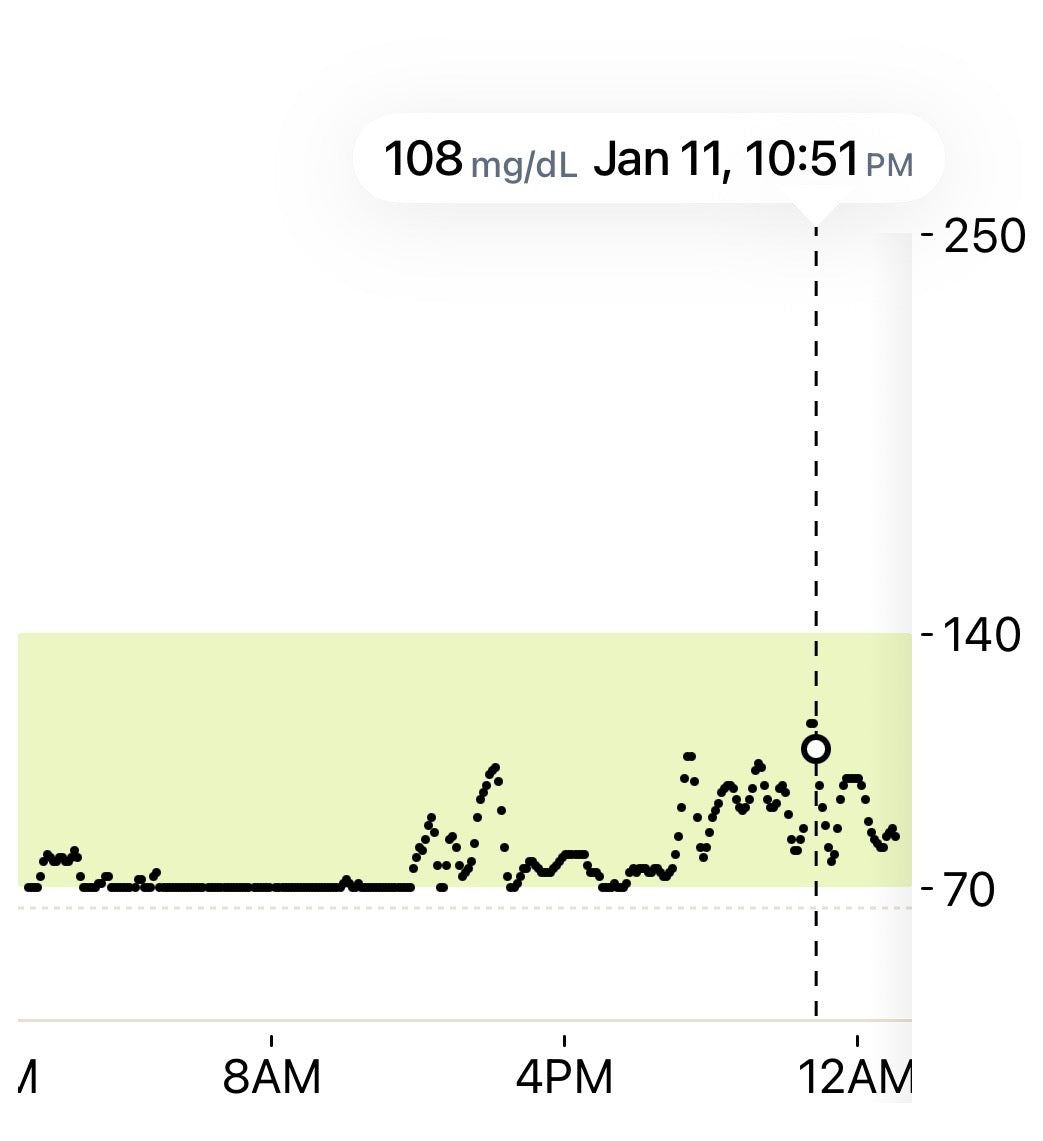

This isn’t a perfectly controlled experiment. I wasn’t able to eat the same thing every day.
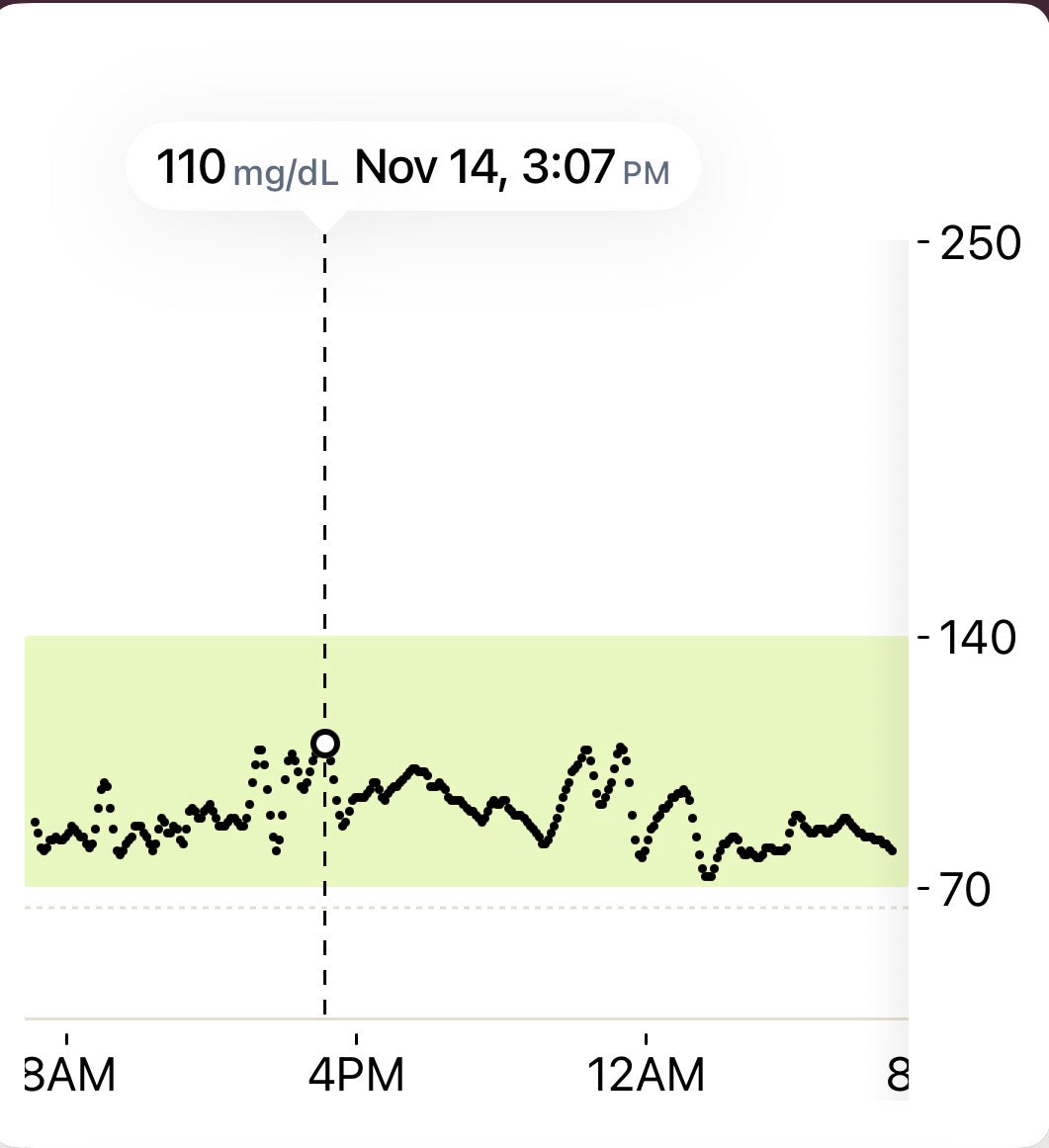
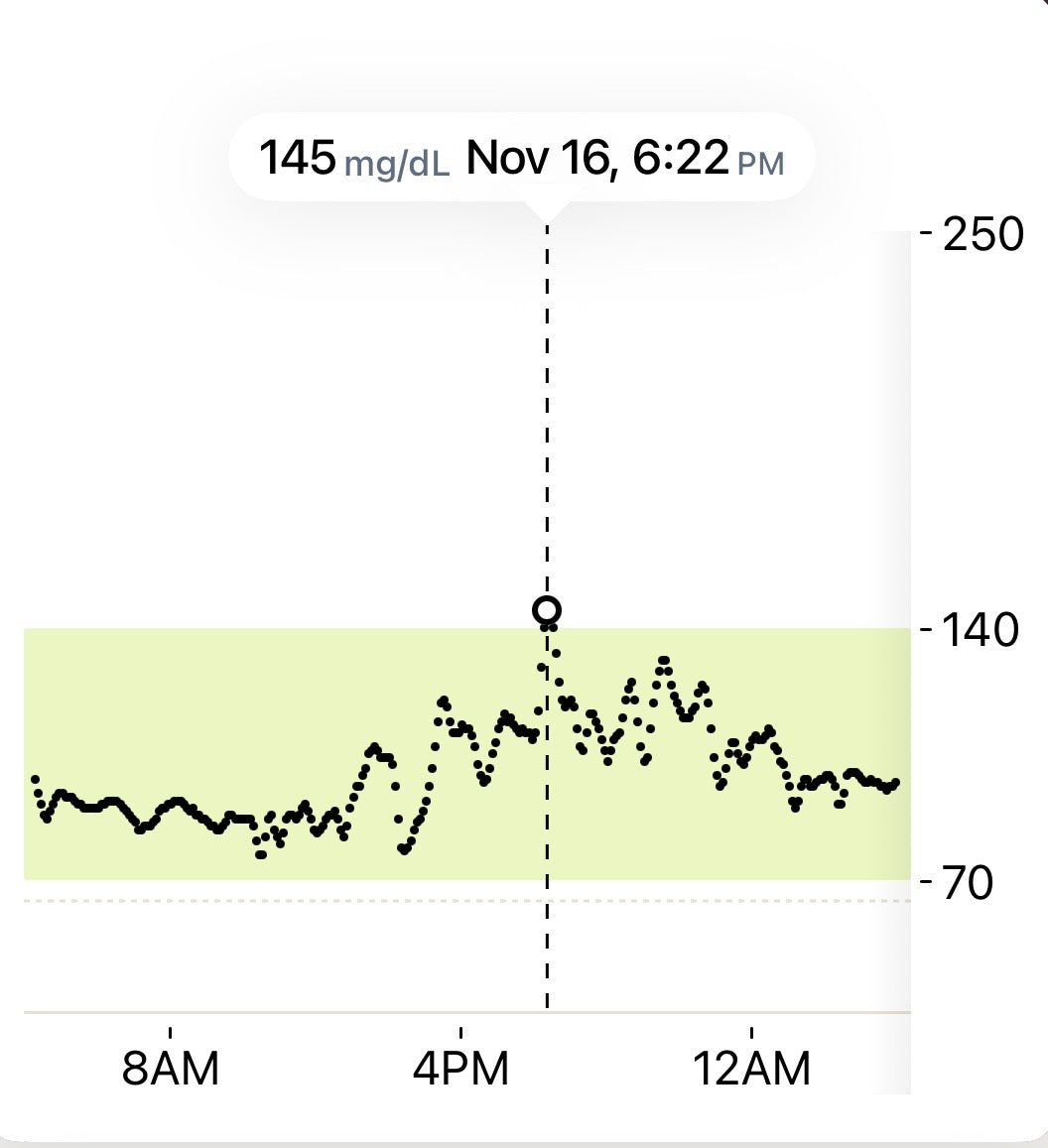
Screenshots from my CGM app, as posted on my Substack.
When your blood sugar spikes, you feel it in your body. It’s hard to ignore.
Maya, founder of Alya
GLP-1 is a hormone your own gut releases when you eat. It prompts insulin release and holds back glucagon, which helps limit how far blood sugar rises after a meal.1 Fat is one signal known to prompt it: when researchers delivered 2-oleoyl glycerol, a fat your body makes as it digests olive oil, into the small intestine of eight healthy volunteers, their GLP-1 went up.2
Ten healthy young adults had higher GLP-1 after a meal made with 80 grams of olive oil (far more than a morning shot) than after one made with butter.3 And 25 healthy adults had higher GLP-1 two hours after a Mediterranean-style lunch with 10 grams of extra virgin olive oil added than after the same lunch without it.4 None of these studies tested Alya.

From my log, Jan 11. I started with my olive oil shot, then I ate a bagel, and then sushi. The entire day was remarkably flat, with glucose sitting at 75-85 through the morning and early afternoon.
In that lunch study, the 25 adults had lower blood glucose two hours after the meal with extra virgin olive oil than after the meal without it, and a smaller rise in glucose than when corn oil replaced it.4
Twenty healthy adults who took 20 mg of oleuropein, one of the polyphenols in extra virgin olive oil, right before lunch had lower blood glucose and higher GLP-1 two hours later than after a placebo.5 Both were single meals in small groups, and that’s all they show.

From my notes. It was particularly challenging to eat heavy foods I’m not used to. On those days, I felt noticeably more lethargic, bloated, and tired.
What the research supports: olive oil polyphenols reach your colon, where gut bacteria break some of them down. Researchers showed this in the lab, then found those breakdown products in people who took a polyphenol-rich olive oil every day for three weeks.6
What it doesn’t: we found no study in healthy adults that measured bloating after olive oil, so I won’t tell you the science proves it.

Alya is organic, unfiltered and single-origin, with 1,800+ polyphenols and a smooth, peppery taste. It’s directly sourced from one family farm in northern Tunisia, harvested early and delivered within weeks so it keeps its freshness and potency.
Every batch is independently lab-tested, and we publish the polyphenol levels of every harvest. Alya is verified at 1,876 mg of polyphenols per kilo, about 7.5 times the EU’s threshold for an olive oil to make a polyphenol claim.
One shot on an empty stomach, 30 minutes before your first meal, every morning. That’s the entire protocol.

Third-party lab tested by World Olive Center.


460 clinicians shared this on FrontrowMD
without compensation. View clinicians
Read their reviews
The essential Alya starter kit. Alya is your daily shot of medicinal-grade extra virgin olive oil. Organic, unfiltered, and single-variety, it’s loaded with 1800+ polyphenols to fuel your health. With a smooth yet peppery taste, you know it’s working.
One shot
One shot on an empty stomach, 30 minutes before your first meal, every morning.

Steady daily intake
Polyphenols work best with steady, daily intake.

Notice the difference
Most people notice improvements in energy and digestion within 2-4 weeks of consistent daily use.*

I love it! I’ve been feeling great... less bloated and fewer sugar cravings. It’s amazing!
Dana, 36 VERIFIED BUYERSince I started taking Alya 2 months ago, I don’t have cravings like I used to. I feel much more stable after meals, no crashes.
Dave VERIFIED BUYERI always felt lethargic after meals. After I started taking Alya a few weeks ago, I have much steadier energy throughout my days.
Yasmine VERIFIED BUYEREvery research statement above is numbered to one of these peer-reviewed papers. They studied olive oil, its fats or one of its polyphenols, not Alya.
*These statements have not been evaluated by the Food and Drug Administration. This product is not intended to diagnose, treat, cure, or prevent any disease.
This page shares one founder’s experience and published research. It isn’t medical advice.


